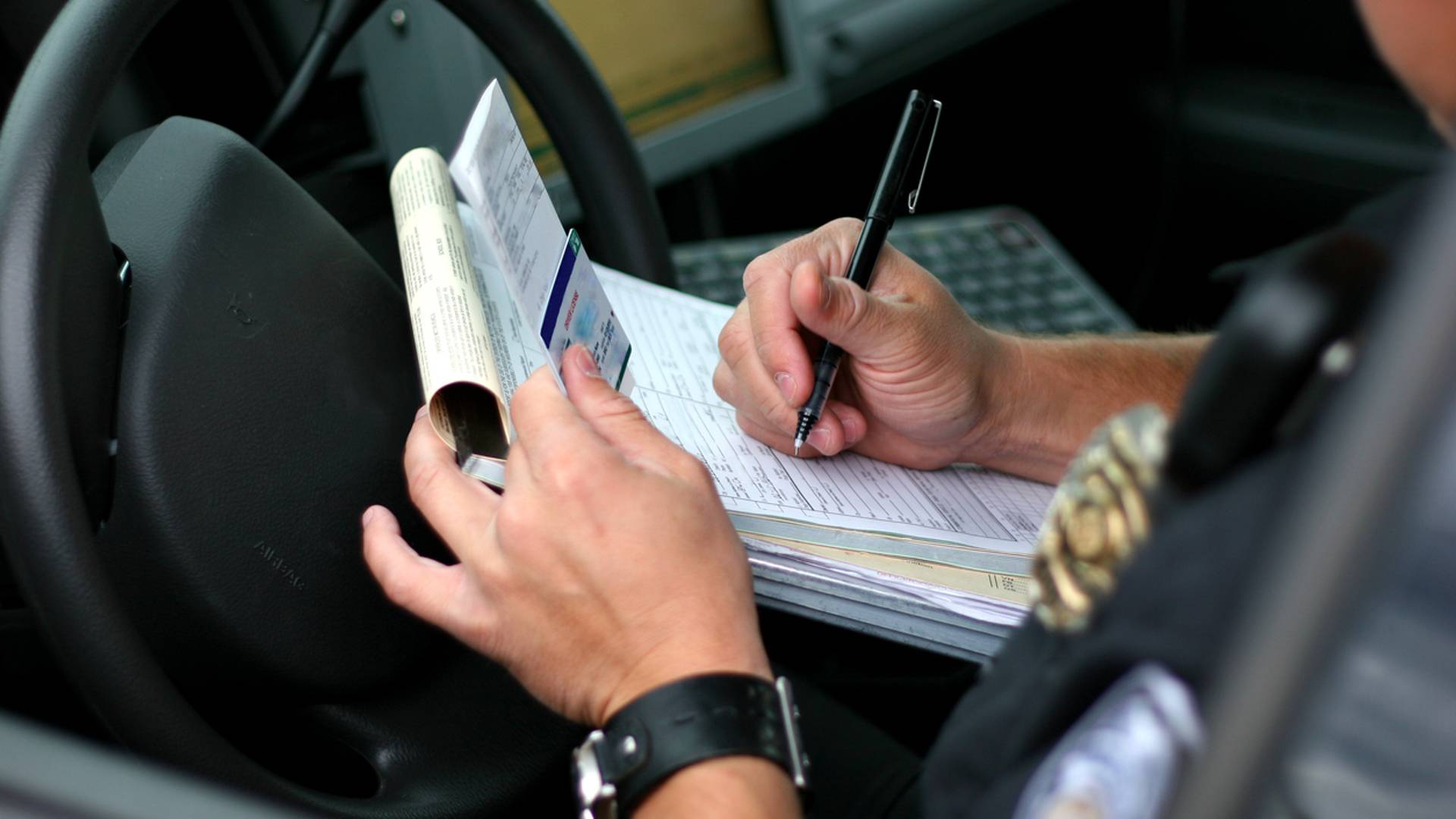
You probably did not plan to ignore your traffic ticket in Fort Wayne. Maybe it is still tucked in your glovebox, or it disappeared into a stack of mail on the kitchen counter. You told yourself you would deal with it when things calmed down, and somehow the deadline slipped past.
For many drivers in Fort Wayne and across Allen County, a traffic ticket feels like a minor nuisance, not the start of something that could affect a license, job, or even lead to an arrest during a routine stop. The surprise comes later, when a police officer, employer, or the Indiana Bureau of Motor Vehicles (BMV) tells them there is a suspension or warrant tied to that forgotten ticket. This is the gap I want to close for you.
I am a Fort Wayne criminal defense attorney, and I regularly work with people who thought an old ticket had simply disappeared. By the time they contact me, a simple infraction has sometimes turned into a suspended license, a bench warrant, or even new criminal charges for driving while suspended. In this article, I will walk through what typically happens if you ignore a traffic ticket in Fort Wayne, how the court and the Indiana BMV interact, and what options you may still have to fix the problem before it gets worse.
Call (260) 833-7249 to talk with Gregory A. Miller about an ignored traffic ticket or license issue in Fort Wayne.
Why Ignoring A Traffic Ticket In Fort Wayne Is Risky
Most of the people I meet who ignored a ticket did not do it out of disrespect for the law. They were overwhelmed, scared, short on money, or they moved and did not get later mail from the court. Some assumed that because the ticket was only for speeding or another minor infraction, nothing too serious would come from letting it sit for a while.
In Fort Wayne, however, a traffic ticket is not just a piece of paper. It opens a case in the Allen County court system, with a case number and deadlines that matter. That case connects directly to your Indiana driving record through the BMV. When nothing happens on your side, processes on the court and BMV side usually continue anyway, and they tend to move in only one direction, toward more serious consequences.
The biggest misconception I see is the belief that the worst outcome of ignoring a ticket is paying a higher fine someday. In reality, if you do not respond, the court can treat that silence as a failure to appear, enter a default judgment against you, and notify the BMV. That can lead to a suspended license, and in some situations a bench warrant for your arrest. Understanding that chain reaction is the first step toward stopping it.
What Happens Right After You Ignore A Fort Wayne Traffic Ticket
Every traffic ticket lists a deadline. In many Fort Wayne cases, you are given a date by which you must either pay the ticket, admit responsibility and handle it by mail, or appear in court to contest it. If that date comes and goes without payment or an appearance, the court typically views that as a failure to appear, even if you never meant to skip anything.
Failure to appear means exactly what it sounds like, the court expected you to respond or show up and you did not. In Indiana traffic cases, when that happens, the judge can enter a default judgment. That is a legal finding that you are responsible for the violation, made without you being in the courtroom. Along with that finding, the court can impose the standard fine and court costs, which now sit on your record as unpaid obligations.
Once there is a default judgment and unpaid balance, the Allen County court generally does not keep that information to itself. Courts communicate with the Indiana BMV through electronic reporting systems. When the court reports an unpaid ticket or a failure to appear, the BMV can add that information to your driving record and begin its own process of restricting your driving privileges. All of this can happen without a single phone call to you, which is why so many people are caught off guard later.
How An Ignored Ticket Can Lead To A Suspended Indiana License
The Indiana BMV has authority to suspend a driver’s license when it receives notice from a court that a person has not paid a traffic judgment or failed to appear in a traffic case. The exact steps can depend on the nature of the ticket and your prior record, but one common scenario is that an ignored ticket leads to a default judgment, which then leads to a suspension notice being added to your record.
Many drivers never see a formal suspension letter, especially if they have moved or their mailing address is not current with the BMV. They continue driving as usual, not realizing that their license is no longer valid in the BMV system. The discovery often comes in a jarring way, during a traffic stop for something simple like a broken taillight, or when an employer runs a driving record check for a job that involves a company vehicle.
Driving while your license is suspended is not just a technicality. In Indiana, driving while suspended can lead to a criminal charge, separate from the original ticket that started the problem. By the time some people reach out to me, they are no longer dealing with a single speeding ticket. They are facing a suspended license, higher insurance risk, and a new criminal case that could have been avoided if the original ticket had been addressed earlier. When I review a BMV abstract, I often see several layers of issues that trace back to that first ignored citation.
When A Bench Warrant Can Be Issued For An Ignored Ticket
Not every traffic ticket situation leads to a warrant, but some do. Certain traffic matters in Fort Wayne require a personal appearance in court, particularly when the alleged violation is more serious or tied to other issues on your record. If you are ordered to appear and you do not, the judge has the option to issue a bench warrant.
A bench warrant is a court order that authorizes law enforcement to arrest you and bring you before the court. It is called a bench warrant because it comes from the judge’s bench, not from a police investigation. In the context of traffic cases, this often follows a missed court date rather than a new allegation of wrongdoing. Yet from the perspective of an officer who sees that warrant in the system, it functions like any other arrest order.
Once a bench warrant is active, it usually sits in law enforcement databases that officers in Fort Wayne and elsewhere can access during any traffic stop. That means a simple stop for rolling through a stop sign can turn into an arrest on an old warrant you barely remember. People are often arrested on these warrants at very inconvenient and embarrassing times, in front of family members or co workers. I have represented clients whose first awareness of a warrant came when an officer told them about it on the side of the road, and they suddenly found themselves in handcuffs over a ticket they thought had gone away.
How To Check The Status Of An Old Ticket, License, Or Warrant
If you suspect that an old Fort Wayne ticket might be causing problems, the first step is to get a clear picture of where things stand. Many Allen County court cases can be searched through online portals, and you can sometimes find your name, case number, and a basic history of what has happened. In some situations, you may need to call or visit the clerk’s office to confirm whether there is an outstanding balance, missed court date, or active warrant.
Your driving status is a separate but related piece. The Indiana BMV maintains your official driving record, including suspensions that result from unpaid tickets or failures to appear. You can generally obtain a copy of your driving record through the BMV. For many people, the record is full of abbreviations, codes, and dates that are not easy to interpret without context. It may list multiple suspensions and reinstatement requirements that reach back several years.
It is also common for people to have more than one issue at the same time, for example, several tickets in different courts that each sent notices to the BMV. Without looking at both the court records and the BMV abstract together, it can be hard to know which problem to tackle first. Part of what I typically do in an initial review is pull the court files and driving record side by side, so we can see exactly which cases, failures to appear, and unpaid amounts are active, and what is truly required to move toward reinstating a valid license and resolving any warrants.
Options To Fix An Ignored Traffic Ticket Before It Gets Worse
The good news is that an ignored ticket does not always have to end in an arrest or a long term suspension. The options you have depend on how far the case has gone, your prior record, and which court is handling it, but there are usually steps we can consider at each stage. If a case is still relatively early, and there is no default judgment yet, we may be able to arrange for payment, request a new court date, or discuss plea options that reduce the impact on your driving record.
When a default judgment has already been entered, and the ticket is now an unpaid judgment on your record, one option is to ask the court to set aside that default and reopen the case. This often involves filing a request that explains why you missed the original date and what you want the court to do now. Some Allen County judges are open to hearing these requests, especially when the person is now taking responsibility and has not ignored multiple court orders, although there are no guarantees. If the default is not set aside, we may still be able to work out a payment plan or a structured way to satisfy what is owed so that the court can notify the BMV that the balance has been taken care of.
For clients with a suspension already in place, the path forward usually involves both the court and the BMV. Paying or resolving the underlying tickets is often necessary, but not always sufficient by itself. The BMV may also require reinstatement fees or the passage of a certain period of time before a license can be fully reinstated. I focus on creating an orderly plan so that we address the cases in the right sequence, and we avoid surprises like thinking a suspension is over when it is still active in the BMV system.
When there is a bench warrant, a careful approach is especially important. In many situations, we can arrange for a voluntary appearance in court to address the warrant instead of waiting for you to be arrested at an unexpected time. Coming to court voluntarily, especially with an attorney and a plan to address outstanding tickets or payments, often puts you in a better position than being brought in on a new arrest. I work with clients to prepare for that appearance, understand what to say and what not to say, and present the situation in a way that shows the judge they are now taking the matter seriously.
How I Approach Fort Wayne Cases Involving Ignored Tickets
When someone comes to me with worries about an ignored ticket in Fort Wayne, I do not start by telling them to simply pay everything and hope for the best. I start by gathering information. I review the original citation if they still have it, pull the Allen County court records for the case or cases involved, and obtain a current copy of their Indiana BMV driving record. This lets me see exactly what has happened so far and how the court and BMV have recorded those events.
From there, I look for both obvious and less obvious issues. I check for multiple failures to appear, for example, where a person may have missed more than one date without realizing it. I pay attention to whether notices appear to have been sent to outdated addresses, and whether paperwork or entries suggest possible errors. I also look at the underlying stop and alleged violation to see whether there are legal or evidentiary issues we might raise, such as problems with how the stop was conducted or how the officer documented what happened.
Because of my ongoing work in the local criminal courts, including my role as a public defender and my membership in the National Association of Criminal Defense Lawyers, I am used to seeing how different judges and prosecutors in this area handle failures to appear, suspensions, and ignored tickets. That experience helps me anticipate where there may be room to negotiate, where a judge may be open to setting aside a default, and when we may need to focus instead on damage control and future compliance. Throughout the process, I keep communication direct and personal, so clients are not left guessing who is actually handling their case or what the next step will be.
When To Call A Fort Wayne Traffic Defense Attorney
Some people can resolve a simple, recent ticket by paying it on time without needing legal help. Once a ticket has turned into an ignored court date, a default judgment, a suspension, or a possible warrant, the situation is different. If you are seeing signs that your license may be suspended, you have received confusing notices, or you are worried that there could be a warrant in Allen County related to an old ticket, it is usually safer to talk with an attorney before you walk into court or drive to the clerk’s office.
It is normal to feel embarrassed about letting a ticket sit too long, especially if years have passed or if there are several tickets in different courts. The reality is that judges and court staff see these situations often, and they are usually more concerned with what you do now than with the fact that you were afraid or overwhelmed before. Facing the problem early, with a clear understanding of your record and a realistic plan, almost always leaves you in a better position than waiting for the next traffic stop to expose it.
If you are dealing with an ignored ticket, or you suspect that an old traffic case in Fort Wayne is affecting your license or has triggered a warrant, I invite you to contact me to talk through your options. A focused review of your court and BMV records can turn a confusing, stressful situation into a set of concrete steps. Then you can decide, with full information, how you want to move forward.
Call (260) 833-7249 to talk with Gregory A. Miller about an ignored traffic ticket or license issue in Fort Wayne.